
Scientific Overview
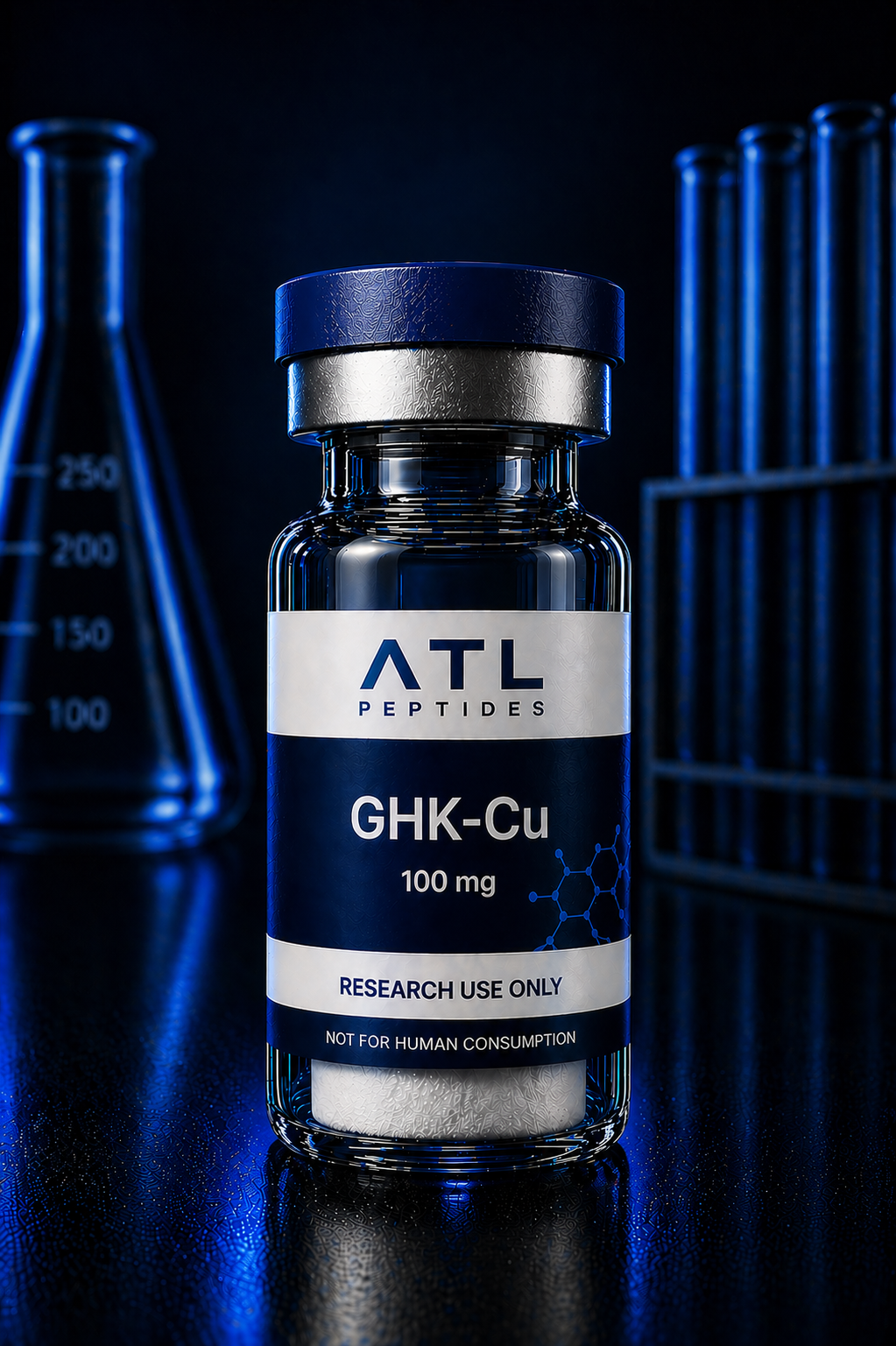
GHK-Cu (Glycyl-L-Histidyl-L-Lysine Copper) is a naturally occurring copper-binding peptide studied extensively in laboratory settings for its role in skin biology, tissue remodeling, and cellular signaling.
In research environments, GHK-Cu has been explored for its potential involvement in collagen synthesis, extracellular matrix remodeling, and gene expression regulation. Its presence in human plasma and its decline with age have made it a focus of studies related to aging and tissue integrity.
Mechanism of Action
Research suggests that GHK-Cu may influence multiple biological pathways, including:
- Collagen and elastin synthesis
- Gene expression modulation
- Anti-inflammatory signaling pathways
These mechanisms are associated with:
- Skin regeneration processes
- Tissue remodeling and repair
- Cellular communication and signaling
GHK-Cu is also studied for its ability to bind copper ions and facilitate their delivery into cells, supporting enzymatic and structural functions in experimental models.
Research Applications
In laboratory and experimental models, GHK-Cu has been studied for:
- Skin and extracellular matrix research
- Aging and gene expression studies
- Tissue repair and remodeling pathways
- Inflammatory response modulation
Research Insights
Preclinical studies suggest that GHK-Cu may play a role in supporting collagen production and tissue regeneration under controlled conditions. Its effects on gene signaling pathways continue to be explored in aging-related research.
However, current findings remain within laboratory and experimental settings.
Technical Specifications
- Compound: GHK-Cu
- Quantity: 50 mg / 100 mg
- Form: Lyophilized powder
- Purity: ≥ 99%
- Storage: 2–8°C
- Stability: Protect from light
Research Disclaimer
This product is intended strictly for laboratory research purposes only.
Not for human consumption.
This product is not intended to diagnose, treat, cure, or prevent any disease.
Reviews
There are no reviews yet.